

Anyone who has observed a busy shop floor, warehouse aisle, or laboratory corridor understands that safety extends beyond signage. It is embedded in the consistent, repeatable actions performed daily. Environmental Health and Safety (EHS) best practices refer to these systematic habits, procedures, and checks that prevent injuries, mitigate environmental incidents, ensure compliance, and promote efficient operations.
This guide provides practical, straightforward strategies that are effective across industries, along with actionable steps for immediate improvement.
What Are EHS Best Practices?
EHS best practices are the proven actions and processes organizations use to manage Environmental Health and Safety risks. They cover three big areas:
- Safety: preventing injuries and illnesses at work
- Environmental protection: preventing spills, releases, and waste issues
- Health: controlling exposure to noise, dust, chemicals, heat, and other hazards
EHS best practices function as a routine health assessment for the workplace. Rather than waiting for issues to arise, these practices emphasize proactive checking, remediation, and continuous improvement to prevent incidents.
EHS best practices typically include leadership involvement, hazard identification, employee training, documentation, incident reporting, and continuous improvement. Many programs also use internal audits and digital systems to keep everything organized.
Why EHS Best Practices Matter for Organizations
EHS responsibilities may appear supplementary until an incident occurs, at which point they become critical to organizational operations.
Strong workplace safety and EHS management practices help you:
- Protect people: fewer injuries, illnesses, and near misses
- Stay compliant: fewer citations, better inspection outcomes.
- Reduce downtime: fewer shutdowns, fewer disruptions.
- Improve quality and productivity: Safer work tends to be more consistent work.
- Build trust: employees feel cared for, and customers see a reliable operation.
From a business perspective, serious incidents can result in investigations, remediation efforts, legal liabilities, and reputational harm. Effective EHS best practices mitigate these risks by establishing a clear structure and accountability.
Leadership Commitment and Safety Culture
Leadership is the primary driver of comprehensive EHS improvement.
A strong safety culture usually shows up in simple, visible behaviors:
What leadership commitment looks like in real life
- Leaders show up for safety walks and ask good questions.
- Production goals do not “win” over safe work.
- Supervisors correct unsafe hazards immediately.
- People can report hazards without fear of blame.
Practical actions that build safety culture
- Set clear expectations
- “We do not do the job if we cannot do it safely.”
- Make safety part of normal operations.
- Safety is discussed in shift handovers and daily huddles.
- Recognize safe behavior
- Catch people doing things right, not only wrong.
- Fix issues fast
- If employees report hazards but nothing changes, reporting stops.
An effective principle is that organizational culture is defined not by stated values, but by the behaviors and conditions that are permitted.
Risk Assessment and Hazard Identification
The existence of a policy alone does not eliminate hazards. A systematic approach is required to consistently identify and control workplace hazards.
Start with a simple hazard hunt
Walk the work area and look for:
- moving equipment and pinch points
- slips, trips, and falls (floors, cords, spills)
- unsafe lifting and awkward postures
- chemical storage and labeling issues
- blocked exits or missing guards
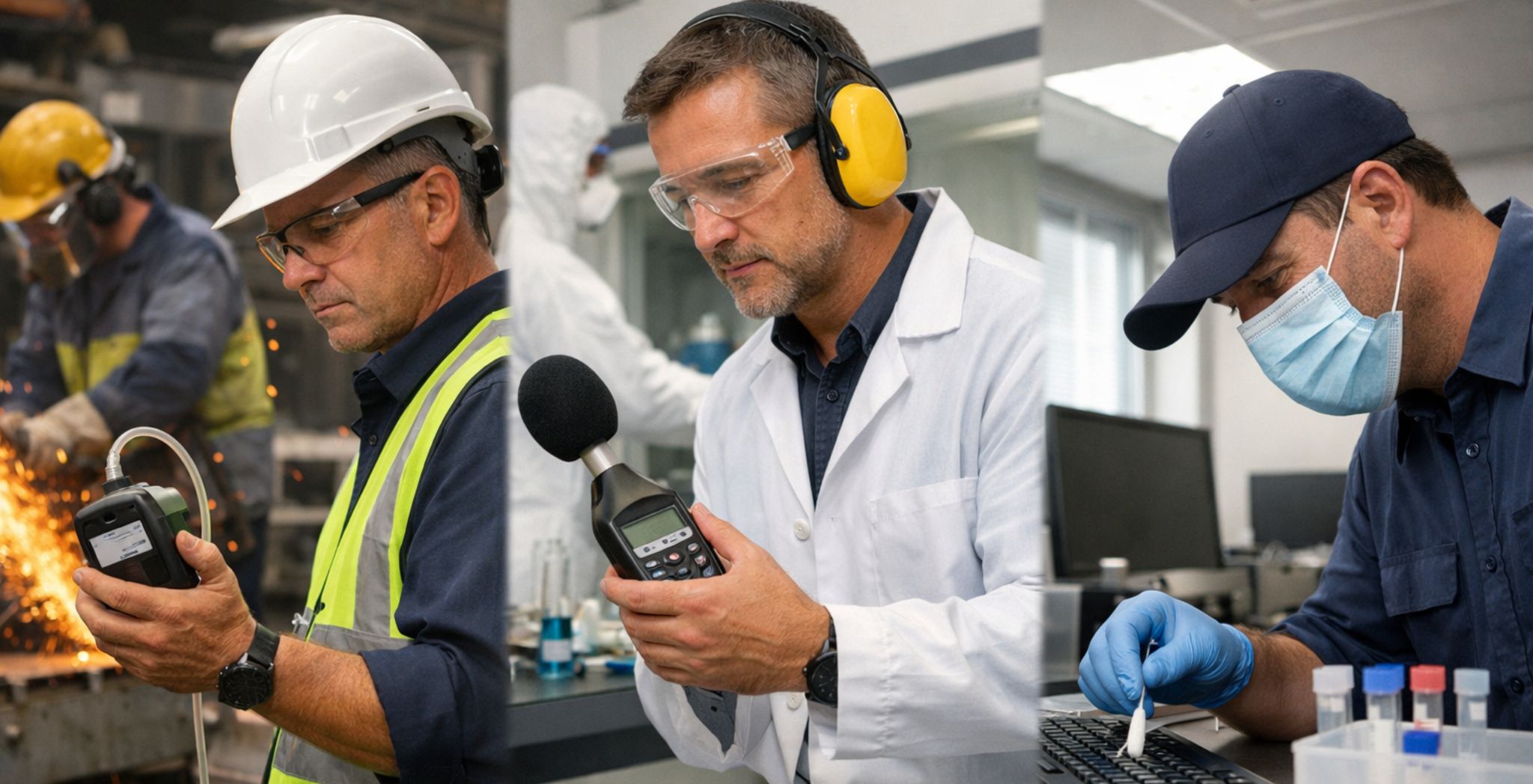
- noise, dust, heat, fumes, poor ventilation
Use a job hazard analysis (JHA) style approach
For a task that has risk, break it down:
- What are the steps?
- What can go wrong at each step?
- What controls prevent it?
Control hazards using the hierarchy of controls
This is the simplest way to avoid weak fixes:
- Eliminate the hazard (remove it)
- Substitute with something safer
- Engineering controls (guards, ventilation, automation)
- Administrative controls (procedures, training, scheduling)
- PPE (gloves, respirators, eye protection)
Personal protective equipment (PPE) is important, but it typically serves as the final layer of protection.
Employee Training and Engagement
Training should be viewed as an ongoing system rather than a singular event.
A useful way to think about employee safety training is: teach, practice, verify, refresh.
What good training includes
- Role-specific content: not generic slides
- Hands-on practice: show the correct way
- Verification: quick checks, observations, short quizzes
- Refresher cadence: initial plus periodic refreshers
Organizations often maintain training records even in the absence of explicit regulatory requirements, as this practice facilitates compliance and simplifies tracking.
How to increase engagement
If training is boring, people forget it. Try:
- short micro-sessions (10–15 minutes)
- toolbox talks focused on one real hazard
- near-miss stories from your own site
- Involving employees in writing and improving SOPs
- Creating safety champions in each team
The most effective safety programs are developed collaboratively with employees, rather than being imposed upon them.
Regulatory Compliance and Documentation
Compliance may appear complex due to varying requirements across jurisdictions and industries. The objective is not exhaustive memorization, but rather the establishment of a framework that ensures organization and preparedness.
Build a simple compliance system
- Know what applies
- Identify regulations relevant to your activities, chemicals, emissions, waste, and worker protection.
- Document how you comply
- Policies, SOPs, permits, training, inspections, and upkeep logs.
- Check yourself
- Internal audits and scheduled inspections.
- Fix gaps
- Corrective actions with owners and deadlines.
Injury and illness recordkeeping (example of “must-know” basics)
In the US, OSHA’s recordkeeping rule (29 CFR 1904) is built around recording, reporting, and electronic submission.
OSHA also requires reporting certain severe events within specific time windows, including reporting a work-related fatality within 8 hours and certain severe injuries (inpatient hospitalization, amputation, loss of an eye) within 24 hours.
OSHA also requires reporting certain severe events within specific time windows, including reporting a work-related fatality within 8 hours and certain severe injuries (inpatient hospitalization, amputation, loss of an eye) within 24 hours.
Even if you are outside the US, the lesson holds: your compliance system must clearly define:
- What gets recorded
- What gets reported
- Who reports it
- How fast it must happen
- where records live and how long you keep them
A simple documentation checklist
Keep these easy to find:
- training records
- inspection and audit reports
- incident and near-miss reports
- corrective action logs
- permits and environmental records (where relevant)
- equipment maintenance and calibration records (where relevant)
Effective documentation is not merely administrative; it enables organizations to clearly demonstrate actions taken, their timing, and subsequent outcomes.
Incident Reporting and Continuous Improvement
While incidents are challenging, they also provide valuable information. Treating incidents with seriousness and applying lessons learned leads to continuous improvement.
What you should capture
- injuries and illnesses
- near misses
- unsafe conditions
- environmental releases and spills
- property damage events
A practical incident process
- Report fast
- Make it easy. Mobile form, hotline, supervisor report, any method that works.
- Make it safe to report
- If employees fear blame, they are less likely to report incidents or hazards.
- Investigate for causes, not guilt
- Look for system issues: training gaps, unclear procedures, equipment problems, production pressure and supervision gaps.
- Correct and prevent
- Fix the immediate problem and the root cause.
- Share the learning
- Short “what happened and what we changed” updates build trust.
Use internal assessments and audits wisely
A common reason audits fail is that they are too broad, leading to overwhelm. Enhesa recommends aligning assessments with top-level goals and limiting scope to make results more actionable.
They also stress choosing the right participants, including people who truly understand site operations and technical experts, and using outside experts when needed.
They also stress choosing the right participants, including people who truly understand site operations and technical experts, and using outside experts when needed.
That advice applies to any EHS audit: focused scope plus the right team equals better results.
Adopting Technology for EHS Management
Technology cannot resolve underlying cultural issues, but it can enhance the efficiency of well-established EHS programs.
Common ways technology helps EHS management:
- centralized document storage (SOPs, SDS, permits)
- easier training tracking
- faster incident reporting and investigation workflows
- dashboards for leading and lagging indicators
- reminders for inspections, audits, and corrective actions
Many EHS programs use software to organize incident investigations, training, and other tasks that are hard to manage using spreadsheets.
What to look for in an EHS tool (simple criteria)
- easy for employees to use
- clear ownership and status tracking
- good reporting (not just data entry)
- mobile access for the field
- audit trail for compliance
Organizations should establish effective processes and discipline prior to implementing software solutions, which should then be used to support and enhance these systems.
Measuring and Monitoring EHS Performance
Improvement is contingent upon effective measurement. However, metrics should be meaningful and actionable, rather than merely fulfilling reporting requirements.
Use both leading and lagging indicators
Lagging indicators (after something happens):
- recordable injuries
- lost time cases
- environmental incidents
- citations and nonconformities
Leading indicators (before something happens):
- hazard reports submitted
- near misses reported
- safety inspections conducted
- corrective actions closed on time
- training completion and competency checks
- inspection completion rates
A robust EHS program typically demonstrates strong performance in leading indicators and progressive improvement in lagging indicators over time.
Keep the review simple
Try a monthly rhythm:
- review top hazards and trends
- Review overdue corrective actions
- Pick 1–2 focus areas for the next month
- Share results with employees, not only leadership
Employees are more likely to support initiatives they have contributed to and can observe making tangible progress.
Conclusion
EHS best practices are straightforward but demand consistent application. Emphasizing leadership commitment, thorough hazard identification, practical training, comprehensive documentation, and a culture of continuous learning yields multiple benefits:
- safer people
- stronger safety compliance
- better operational performance
It is advisable to begin with a focused area, implement effective improvements, and expand efforts incrementally.
Take Action
To strengthen an EHS program, begin with a self-assessment by selecting a high-risk area, identifying primary hazards, and assigning corrective actions with designated owners and deadlines. For assistance in aligning the program with regulatory requirements and developing a practical improvement plan, consult a qualified EHS professional.
Frequently Asked Questions (FAQs)
Q. What are EHS best practices?
They are proven methods for improving Environmental Health and Safety outcomes, including safety culture, hazard control, training, compliance documentation, incident learning, and performance tracking.
Q. How do I improve workplace safety quickly?
Start with visible hazards: housekeeping, guarding, traffic management, and defined processes for high-risk tasks. Make hazard reporting easy and fix issues quickly.
Q. What is the difference between regulatory compliance and workplace safety culture?
Compliance is meeting requirements. Safety culture is how people behave when no one is watching. You need both.
Q. How often should we do EHS audits or assessments?
It depends on risk, change, and regulatory needs. A practical approach is scheduled inspections plus periodic focused assessments. Keeping the scope clear and aligned to goals makes audits more effective.
Q. What EHS records should we keep?
At minimum: training records, inspection/audit results, incident reports, corrective actions, including all needed regulatory documents. In the US, OSHA recordkeeping includes recording, reporting, and electronic submission elements under 29 CFR 1904.
Q. How can technology help EHS management?
It can improve reporting, tracking, documentation, and visibility, especially for training and incident workflows. It works best when the underlying process is already clear and owned.



Leave A Comment