
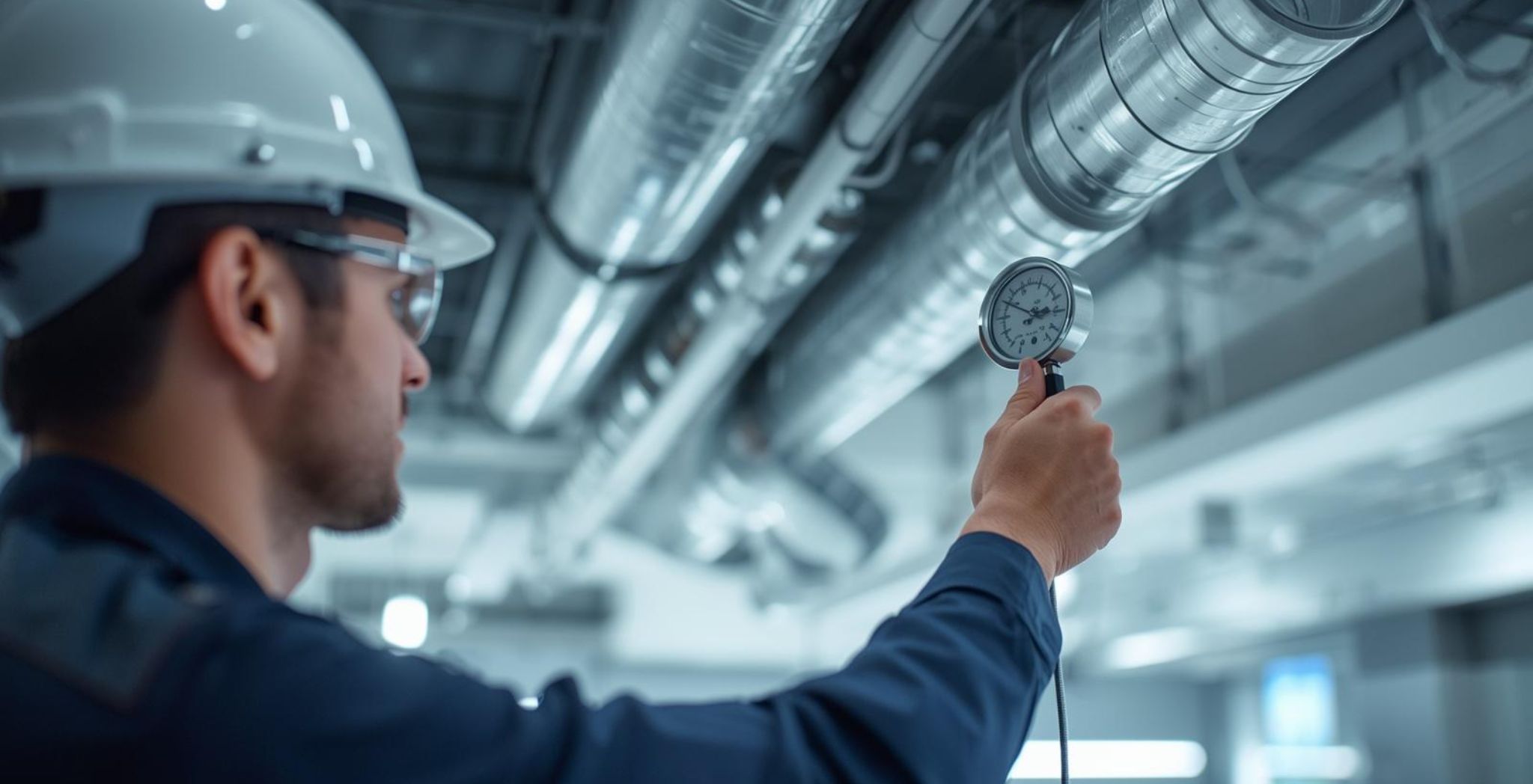
Walk into any large commercial building and you will notice something right away some rooms feel perfectly comfortable while others are too hot, too cold, or stuffy no matter what the thermostat says. This is not always a broken unit or a failing compressor. More often than not, the problem comes down to airflow. Specifically, it points to a lack of proper HVAC air balancing.
HVAC air balancing is the process of adjusting how conditioned air is distributed throughout a building so that every space receives the right amount of airflow. When a system is out of balance, certain zones get flooded with air while others barely receive enough to maintain a comfortable temperature. This uneven distribution puts stress on the entire system, drives up energy costs, and creates discomfort for everyone in the building.
For commercial and industrial facilities, where multiple zones, floors, and occupancy levels must all be managed at once, keeping airflow properly balanced is not optional it is essential.
This article walks through everything facility managers and building engineers need to understand about HVAC air balancing, including how airflow testing works, why duct testing matters, how system performance is evaluated, and what professional testing and balancing services actually involve.
Understanding HVAC Air Balancing

To understand air balancing, you first need to understand how an HVAC system moves air. A central system pulls return air back to the air handling unit, conditions it either heating or cooling it and then pushes it through a network of ducts to supply grilles and diffusers throughout the building. The design of the system assumes that a certain volume of air will reach each zone. When that designed volume does not match what is actually flowing, the system becomes imbalanced.
Imbalanced airflow causes problems that go beyond simple discomfort. Temperature inconsistencies develop between rooms or floors. Thermostats in one area may call for cooling while a nearby zone is already too cold. The system ends up working harder to compensate, cycling more frequently, and wearing out components faster than it should.
HVAC testing is the starting point for understanding where these imbalances exist. Without measuring what is actually happening inside the system, any adjustments are just guesswork. Proper balancing gives engineers a clear picture of airflow at every point in the system from the air handling unit all the way to individual supply and return outlets.
When a system is properly balanced, conditioned air reaches every area of the building in the right quantity and at the right pressure. Occupants stay comfortable. The system runs efficiently. Energy consumption drops. Maintenance costs go down. And the lifespan of the equipment improves because it is no longer fighting against an imbalanced distribution network.
In short, air balancing is not a one-time fix. It is an ongoing part of managing a high-performing building.
HVAC Airflow Testing and System Performance
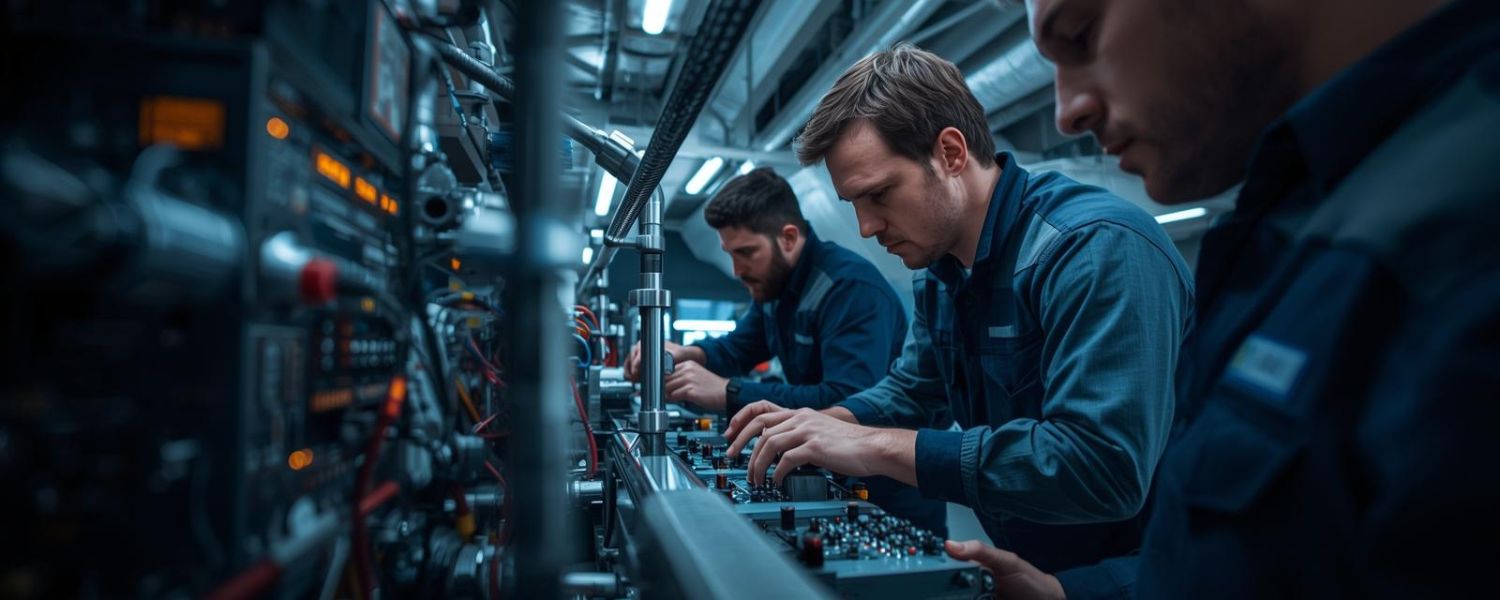
Airflow testing is the foundation of any air balancing project. Before any adjustments are made, technicians need accurate data about how air is actually moving through the system not how it was designed to move, but how it is moving right now.
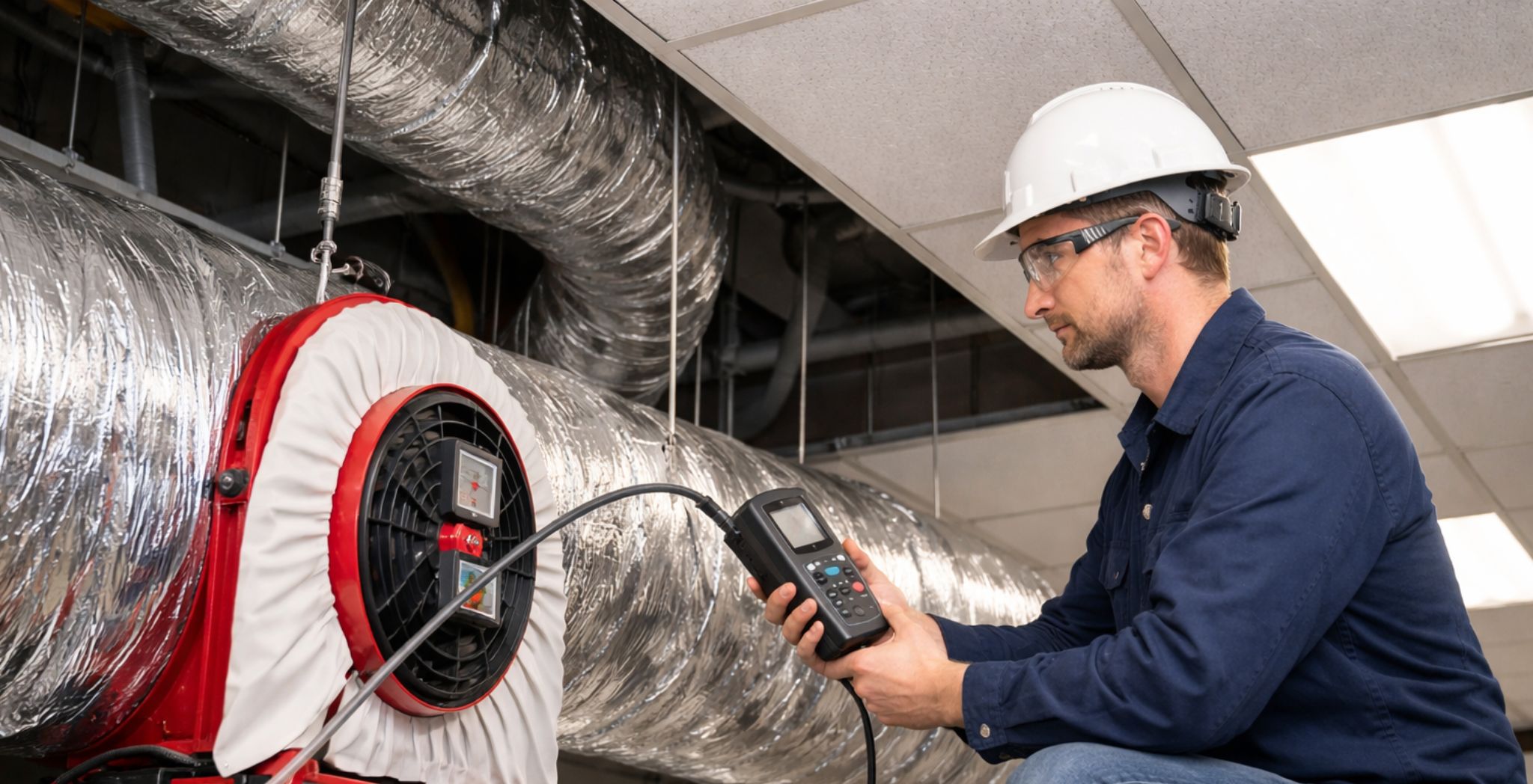
HVAC airflow testing involves measuring the volume of air at supply and return outlets throughout the building. Technicians use calibrated instruments such as digital flow hoods, anemometers, and manometers to capture readings at each grille and diffuser. These measurements are compared against the design specifications for the system to identify where airflow is too high, too low, or uneven.
Airflow Measurement Techniques
The most common approach involves placing a flow hood directly over a supply or return grille. The hood captures all the air coming through the outlet and measures the total cubic feet per minute (CFM). These readings are logged and mapped across the building to create a full picture of how air is distributed at any given time.
In larger systems, duct traverses are performed. A technician inserts a probe into the duct at multiple points across its cross-section and averages the readings to calculate total airflow. This method is used when direct grille measurements alone are not sufficient to identify the source of an imbalance.
Identifying Airflow Restrictions
HVAC testing also helps identify restrictions that limit airflow before it reaches its destination. Collapsed duct sections, poorly installed dampers, filters that are overloaded, or improperly sized ductwork can all create resistance that chokes off airflow to specific zones. Without testing, these restrictions often go undetected for years.
Evaluating System Efficiency
Once airflow data is collected, engineers can evaluate overall system efficiency. A system delivering significantly more or less air than design specifications suggests points to underlying problems whether in the equipment itself, the duct network, or the control configuration. This data becomes the roadmap for the balancing work that follows.
The Importance of HVAC Duct Testing
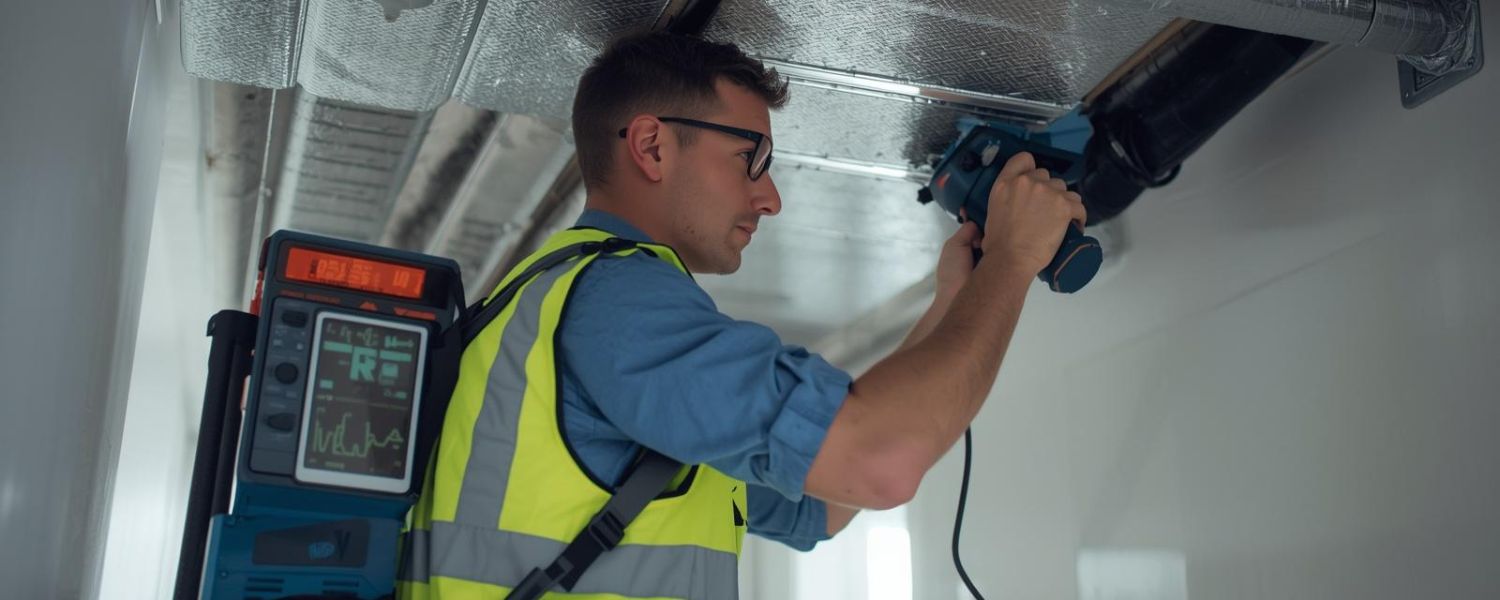
Even the most carefully balanced airflow system will underperform if the duct network carrying that air is not in good condition. Duct leakage is one of the most common and most overlooked causes of poor system performance in commercial buildings.
HVAC duct testing measures how much air is escaping from the duct system before it reaches its intended destination. In a leaky duct system, conditioned air seeps out into unconditioned spaces wall cavities, ceiling plenums, mechanical rooms rather than flowing to occupied areas. The result is wasted energy, reduced comfort, and a system that has to work much harder to achieve the temperatures the building requires.
Air Leakage in Duct Systems
Leakage occurs at seams, joints, and connections throughout the duct network. Over time, sealants deteriorate, metal sections shift, and gaps develop. In older buildings, it is not unusual to find duct systems losing 20 to 30 percent of their conditioned air to leakage sometimes more. This represents a significant and ongoing energy loss that adds up month after month.
Impact of Poorly Sealed Ducts
Beyond energy waste, leaky ducts create pressure imbalances that make it nearly impossible to properly balance airflow to occupied spaces. If a large volume of air is escaping near the air handling unit, zones further down the duct run will be starved of airflow regardless of how the dampers are adjusted. Fixing the leakage is a prerequisite to achieving a proper balance.
How Duct Testing Improves System Efficiency
Duct pressure testing often called duct leakage testing involves pressurizing or depressurizing the duct system using a calibrated fan and measuring how much airflow is required to maintain a specific pressure level. The higher the required airflow, the more leakage exists in the system. Results are compared against industry standards, and areas of significant leakage are identified and sealed.
By combining duct testing with airflow testing, engineers get a complete picture of where the system is losing performance. Sealing duct leakage before balancing airflow ensures that the balance achieved will hold over time and that energy savings are maximized.
HVAC Testing and Balancing Process 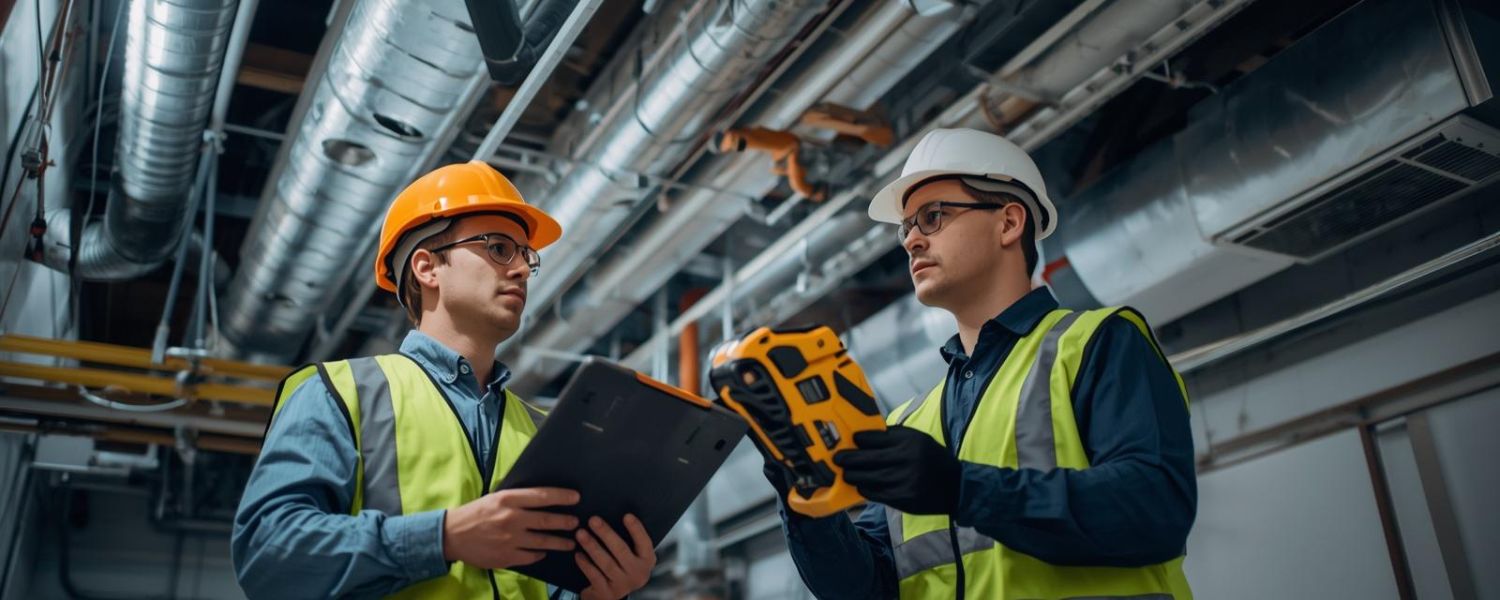
Once testing data has been collected and analyzed, the actual balancing work begins. HVAC testing adjusting & balancing is a structured process carried out by trained professionals using specialized equipment. It is not simply opening or closing a few dampers it involves a methodical evaluation and adjustment of the entire air distribution system.
System Inspection and Airflow Measurement
The process starts with a full inspection of the HVAC system. Technicians review the original design documentation, inspect the air handling units, check fan performance, and verify that filters, coils, and other components are in proper condition. Any mechanical issues that could affect airflow are noted before balancing begins.
Airflow measurements are then taken at every supply and return outlet throughout the building. These readings establish the current baseline and highlight the gaps between design intent and actual performance.
Adjusting Dampers and Airflow Components
Testing and balancing HVAC systems involves making precise adjustments to the components that control airflow distribution. Volume control dampers, located throughout the duct system, are the primary tools used to regulate how much air reaches each branch and outlet. Technicians adjust these dampers incrementally, re-measure after each adjustment, and work toward bringing every outlet within an acceptable range of its design target.
Fan speeds, static pressure settings, and control sequences may also be reviewed and adjusted during this process. In variable air volume (VAV) systems, terminal unit setpoints and controller calibration are verified and corrected as needed.
Balancing Air Distribution Across Building Zones
HVAC testing and balancing at the zone level ensures that each area of the building regardless of its location, size, or occupancy pattern receives consistent, appropriate airflow. Zones that were previously over-supplied are adjusted down. Under-served zones receive increased airflow. The overall result is a system that delivers comfort evenly across the entire building rather than concentrating it in certain areas while neglecting others.
A detailed report documenting all measurements and adjustments is provided at the conclusion of the project, giving facility managers a permanent record of the system’s balanced condition.
Benefits of Proper HVAC Air Balancing
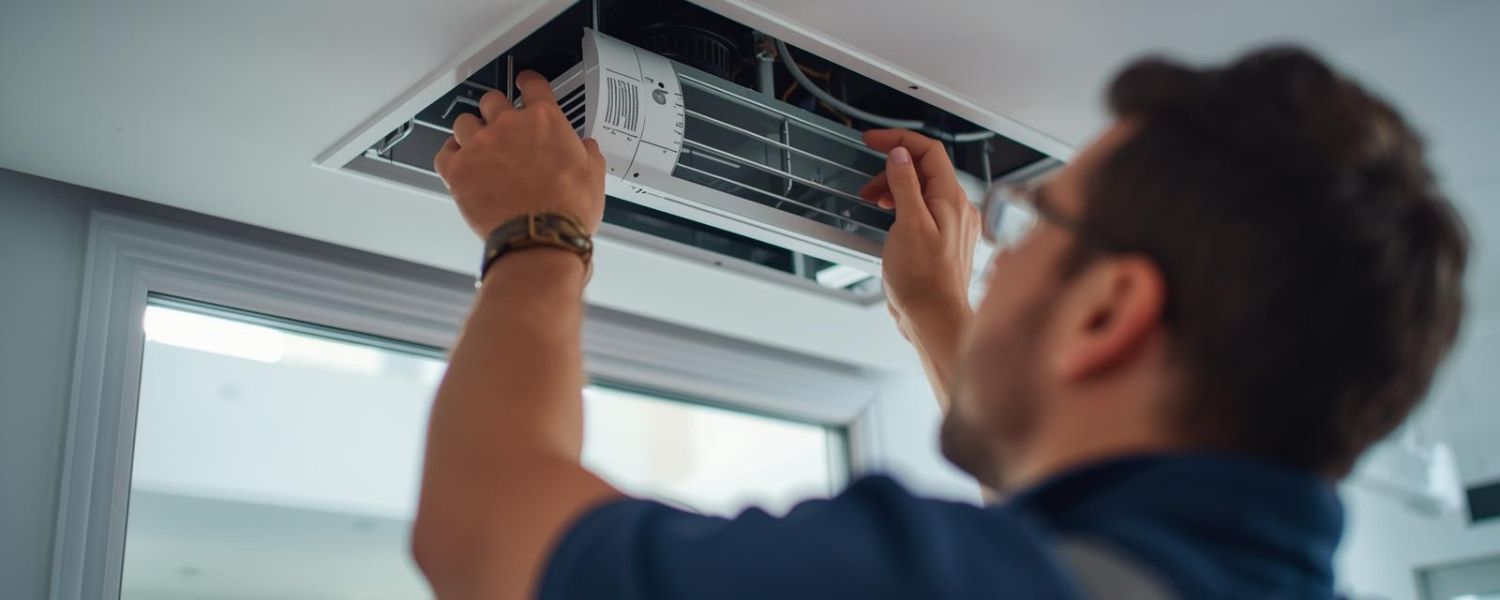
The advantages of a properly balanced HVAC system extend well beyond comfort. They affect energy costs, equipment longevity, air quality, and overall building operations.
Improved Energy Efficiency When airflow is properly balanced, the system does not have to over-compensate for poorly served zones. Fans run at appropriate speeds. Equipment cycles less frequently. Energy consumption drops measurably often by 10 to 25 percent in buildings where significant imbalances existed previously.
Consistent Indoor Temperatures Proper HVAC air balancing eliminates the hot and cold spots that frustrate occupants and lead to constant thermostat battles. Every area of the building maintains its target temperature consistently, improving occupant satisfaction and productivity.
Better Indoor Air Quality Balanced airflow ensures that fresh, filtered air reaches every part of the building as intended. Areas that were previously under-ventilated due to poor airflow distribution receive adequate fresh air exchange, reducing the buildup of pollutants, humidity, and odors.
Reduced System Strain An imbalanced system forces equipment to work beyond its designed operating parameters. Motors, fans, compressors, and controls all experience additional wear when the system is fighting against poor airflow distribution. Proper balancing reduces this strain and extends the service life of the equipment.
Don’t Let HVAC Imbalances Disrupt Your Facility – Get Balanced Airflow Today!
HVAC systems are intricate, and achieving optimal airflow balance requires more than experience — it requires the right instruments, methodology, and a deep understanding of how the entire system works together. Ensure your HVAC system runs efficiently and comfortably by scheduling professional HVAC air balancing services today.
Our team of certified specialists is ready to evaluate your system’s performance, identify hidden inefficiencies, and restore proper airflow distribution throughout your facility. From comprehensive airflow testing to system adjustments, we have the expertise to keep your building running at its best.
Frequently Asked Questions
What is HVAC air balancing?
HVAC air balancing is the process of adjusting airflow throughout a building so that every area receives the correct amount of conditioned air based on its design specifications. It involves measuring current airflow at all supply and return outlets, identifying imbalances, and making targeted adjustments to dampers, fan settings, and other system components until air is distributed evenly and efficiently across all zones.
Why is HVAC airflow testing important?
Airflow testing provides the accurate, measurable data that balancing work depends on. Without testing, technicians have no reliable way to know where imbalances exist, how severe they are, or whether the adjustments they make are actually improving performance. Testing identifies restricted zones, over-supplied areas, and system inefficiencies that would otherwise go undetected, making it the essential first step in any balancing project.
What is HVAC testing and balancing?
HVAC testing and balancing is the complete process of measuring airflow throughout a system, evaluating performance against design specifications, adjusting system components to correct imbalances, and verifying that air is distributed evenly across all building zones. It combines precise measurement, mechanical adjustment, and performance documentation into a structured service that optimizes the entire air distribution system.
How often should HVAC systems be balanced?
Systems should be balanced when first installed and commissioned, following major renovations or layout changes, after significant equipment replacements, and whenever occupants report persistent comfort complaints or energy costs rise unexpectedly. For many commercial facilities, periodic rebalancing every few years is recommended as a proactive maintenance measure to maintain optimal performance.
Where should I get HVAC air balancing in the US?
HVAC air balancing should be conducted by trusted and certified environmental compliance experts. It’s crucial to work with professionals who hold industry-recognized certifications and specialize in testing, adjusting, and balancing HVAC systems. These qualified technicians use calibrated instruments and adhere to strict protocols to ensure precise measurements and lasting system improvements. By choosing certified specialists with proven expertise, you can ensure the optimal performance and efficiency of your HVAC system.




Leave A Comment