

In the fast-paced world of medicine, the focus is often on the immediate needs of the patient. However, behind every life-saving surgery, every prescription filled and every diagnostic test run, there is a complex framework of rules working in the background. This framework is known as healthcare compliance.
For many providers and staff, compliance can feel like a mountain of paperwork or a series of “red tape” hurdles. In reality, healthcare compliance is the heartbeat of a functional medical facility. It ensures that patients are safe, data is private and the environment in which care is delivered is free from hazards.
In this blog, we will break down the essentials of compliance, moving from legal regulations to the often-overlooked area of environmental and facility safety.
What Is Healthcare Compliance?

To understand the industry, we must first answer the fundamental question: what is healthcare compliance? At its core, healthcare compliance is the process of adhering to laws, regulations, guidelines and specifications relevant to healthcare practices. It involves a commitment to following both federal and state laws, as well as the internal policies of a specific medical organization.
When people ask what is healthcare compliance, they are usually referring to a few key areas:
- Patient Privacy (HIPAA): Ensuring that sensitive patient data is protected and only shared with authorized parties.
- Billing and Coding: Making sure that insurance companies and government programs like Medicare are billed correctly to prevent fraud and abuse.
- Clinical Standards: Following evidence-based protocols to ensure patients receive the highest quality of care.
- Environmental and Occupational Safety: Adhering to standards set by OSHA and the EPA to keep the physical building safe for patients and staff.
Essentially, what is healthcare compliance boils down to doing the right thing, even when no one is looking, to ensure the integrity of the healthcare system.
Why Healthcare Compliance Matters?

Compliance is not just about avoiding fines; it is about building a culture of safety and trust. When an organization prioritizes what is healthcare compliance, it reaps several benefits:
- Protects Patients: Compliance ensures that treatments are administered safely and that patient information remains confidential, which prevents identity theft and medical errors.
- Prevents Legal Penalties: Violating healthcare laws can lead to massive fines, the loss of medical licenses and even criminal charges.
- Improves Quality of Care: By following standardized protocols, healthcare providers reduce the risk of accidents and improve patient outcomes.
- Builds Trust: Patients are more likely to visit a facility that they know operates under strict ethical and legal guidelines. Similarly, insurance companies and regulatory bodies view compliant organizations as reliable partners.
Key Components of Healthcare Compliance Programs

For a hospital or clinic to stay compliant, they cannot simply hope for the best. They must implement a structured compliance program. Most effective programs include these four pillars:
- Policies and Procedures: Every organization needs a written “playbook.” These documents define the rules for everything from how to handle a patient’s medical records to how to clean a surgical suite.
- Training and Education: Compliance is a team effort. Staff at every level from the front desk to the operating room must be trained on relevant laws. If the staff doesn’t know what is healthcare compliance in the context of their specific job, the program will fail.
- Auditing and Monitoring: Regular internal “check-ups” help identify risks before they become legal nightmares. This includes reviewing billing records and testing facility equipment.
- Reporting and Corrective Action: There must be a way for employees to report concerns without fear of retaliation. If a mistake is found, the organization must take immediate steps to fix it and prevent it from happening again.
Environmental Compliance in Healthcare Settings
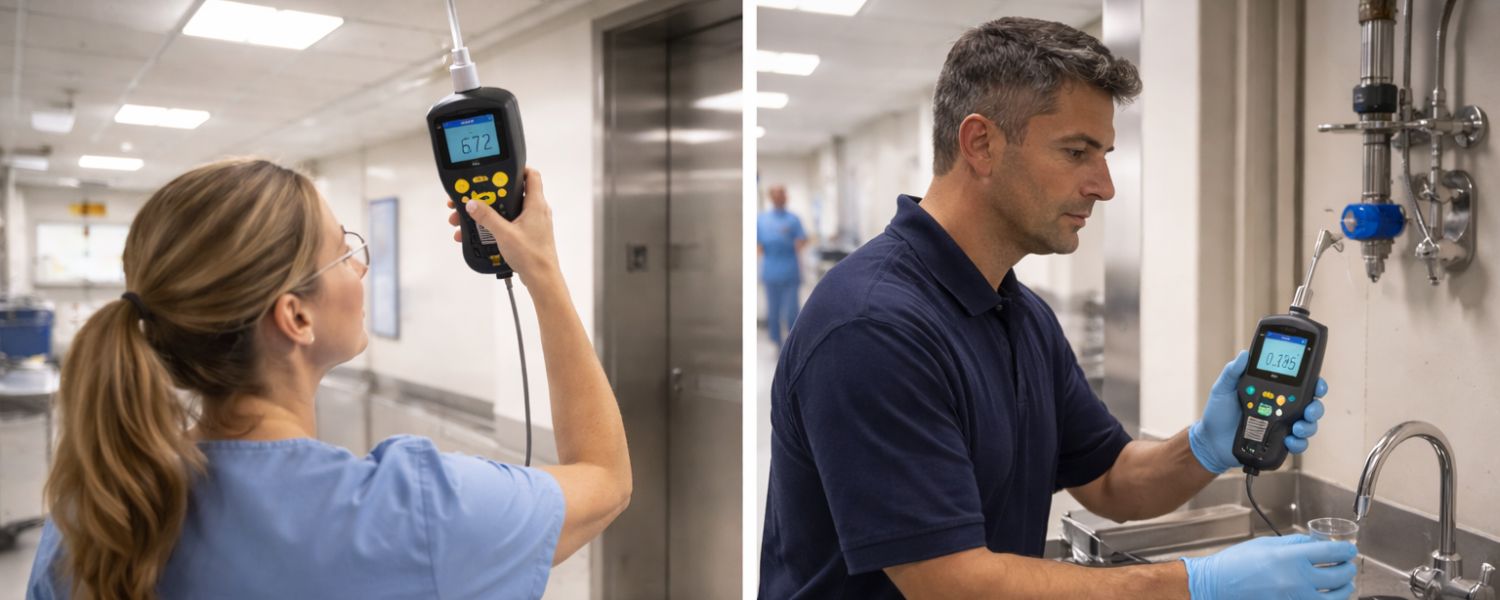
While many focus on the legal and financial side, the physical environment of a hospital is a massive part of the compliance pu zzle. This is where clinical standards meet facility management. Patients in hospitals are often immunocompromised, meaning the air they breathe and the water they drink must be pristine.
Indoor Air Quality Assessment is a vital part of environmental compliance. In a healthcare setting, poor air quality can lead to the spread of airborne pathogens or “Sick Building Syndrome.” Compliance involves regular testing to ensure that CO2 levels, humidity and volatile organic compounds (VOCs) are within safe limits.
Similarly, Water Testing & Compliance is non-negotiable. Hospitals use water for everything from sterilization to patient hydration. Regulations require strict monitoring for bacteria like Legionella, which can thrive in complex hospital plumbing systems. Failure to maintain water safety is a direct violation of healthcare compliance standards.
Industrial Hygiene & Exposure Monitoring for Compliance
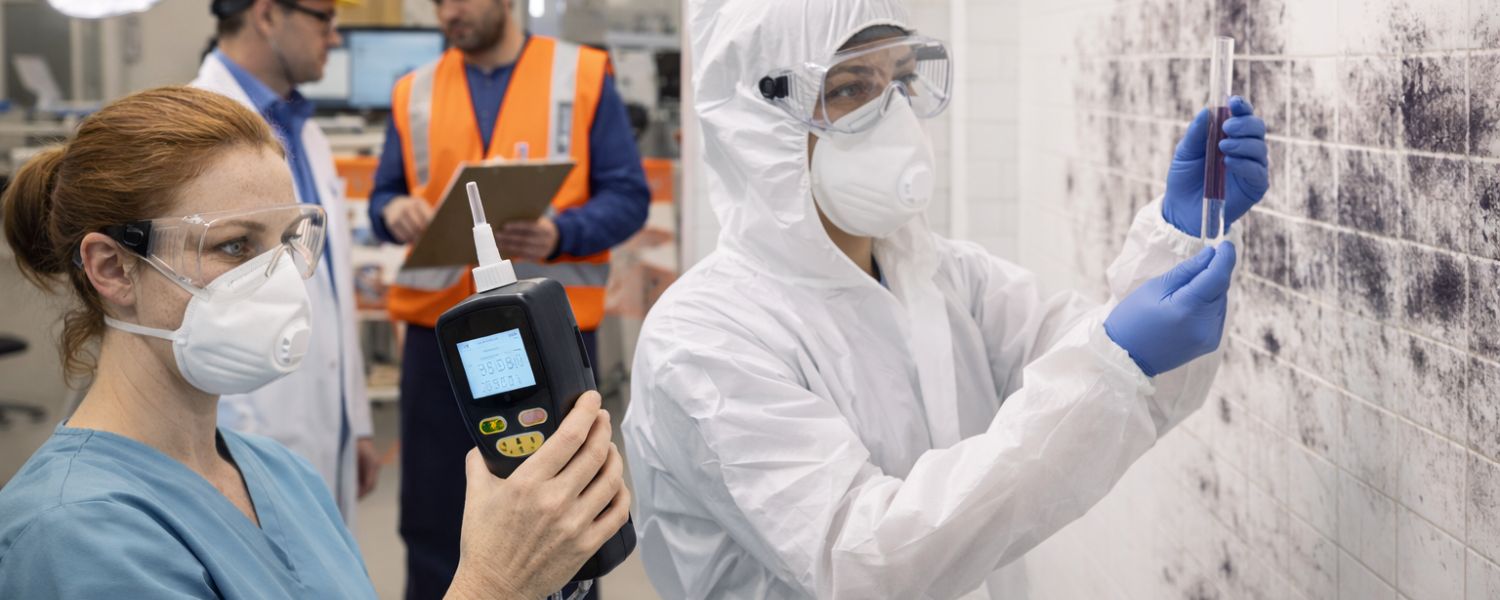
The safety of the healthcare staff is just as important as the safety of the patients. Doctors, nurses and lab technicians are often exposed to hazardous materials. To stay compliant with OSHA (Occupational Safety and Health Administration) standards, facilities must invest in Industrial Hygiene Assessment & Exposure Monitoring.
This process involves evaluating the workplace for potential hazards such as:
- Chemical vapors from sterilization agents.
- Particulate matter from construction or renovation.
- Biological hazards like mold spores.
By monitoring exposure levels, an organization proves it is taking proactive steps to protect its workforce. Understanding what is healthcare compliance in this context means recognizing that a safe employee is essential for a safe patient.
Facility System Compliance: HVAC & Cleanrooms
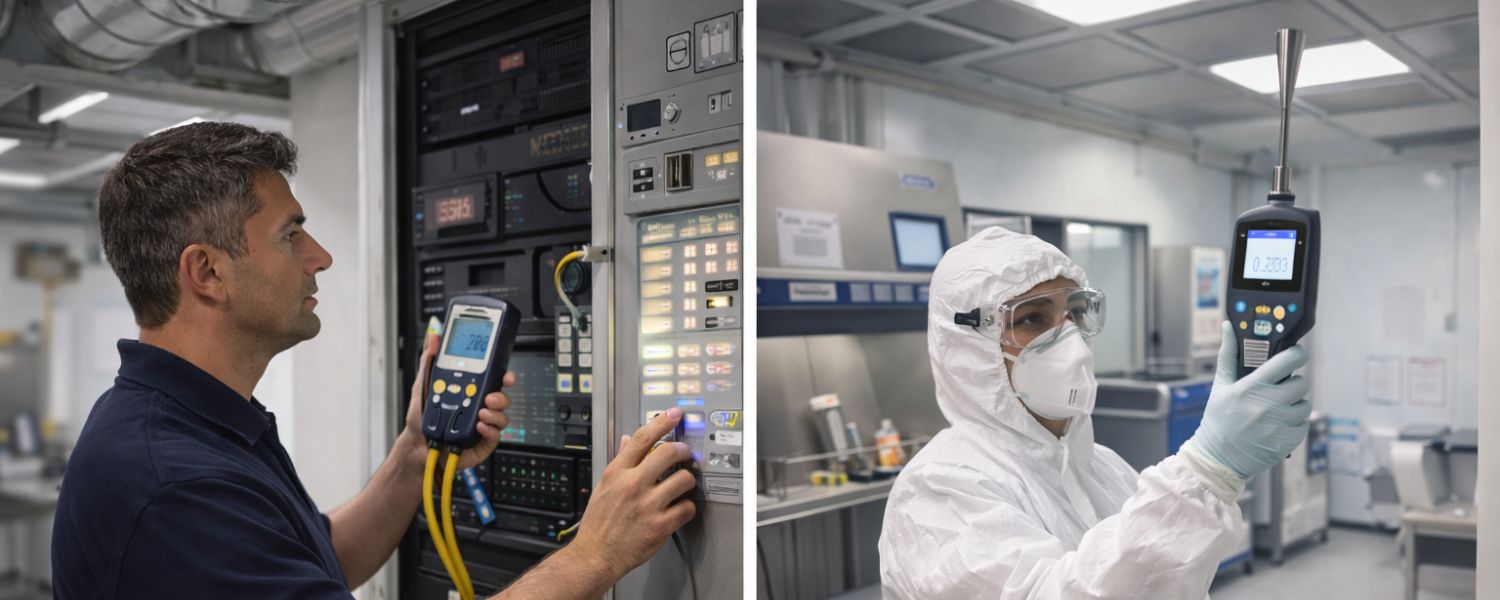
The “bones” of a healthcare building its mechanical systems must also meet strict regulatory standards. If an HVAC system fails, the entire facility’s compliance status is at risk.
HVAC Testing & Compliance ensures that the air exchange rates in a hospital are sufficient to remove contaminants. Different areas of a hospital require different air pressures; for example, an operating room must have positive pressure to keep outside germs from entering. Regular testing verifies that these systems are performing as designed.
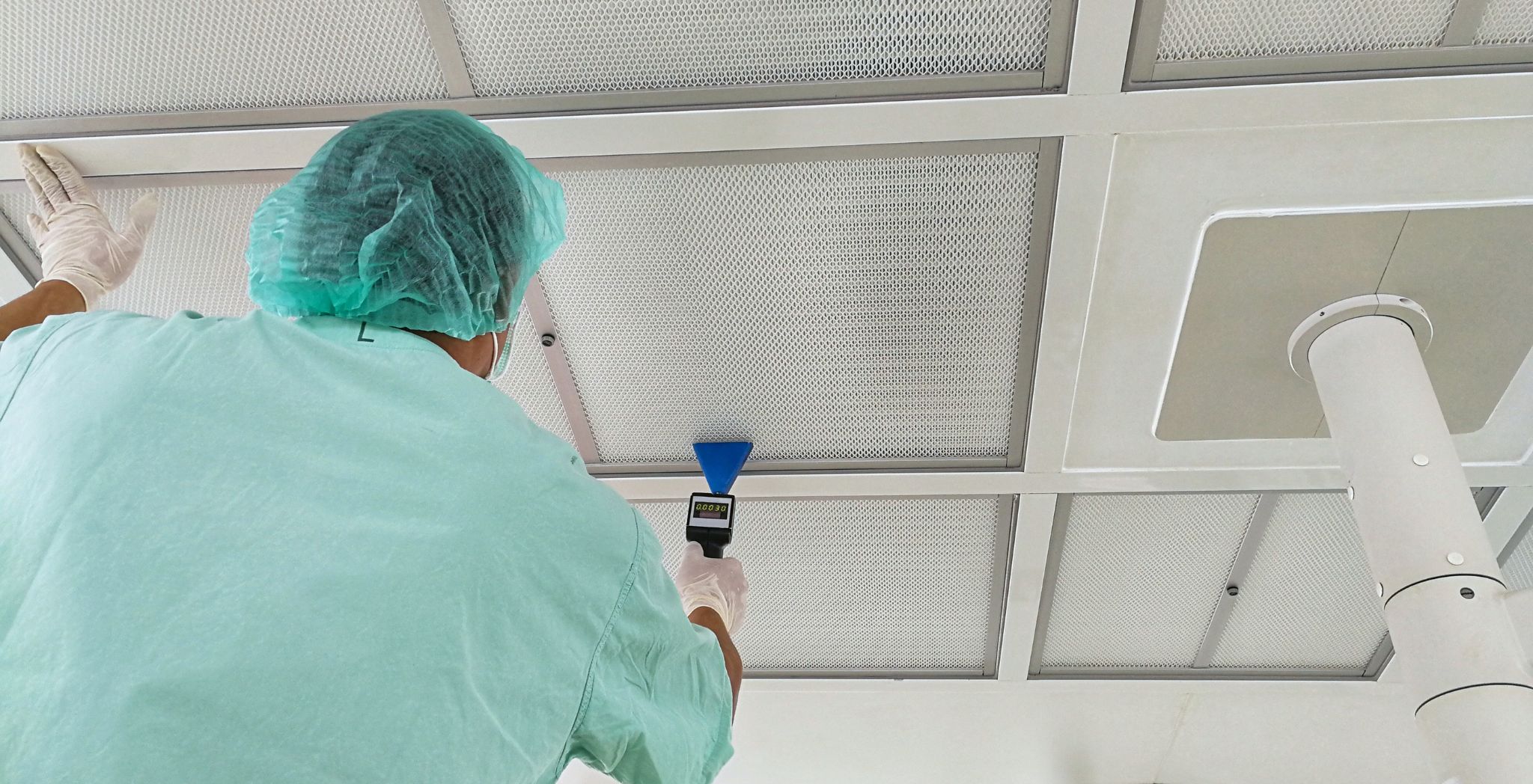
For specialized areas like medical research labs or compounding pharmacies, Cleanroom Performance Testing & Certification is required. These environments must be “ultra-clean” to prevent the contamination of drugs or research samples. To maintain compliance, these rooms must be certified regularly to prove that their filtration systems (HEPA) and airflow patterns meet ISO standards. When we ask what is healthcare compliance for a pharmacist, the answer often lies in the certification of their sterile workspace.
Common Compliance Challenges in Healthcare
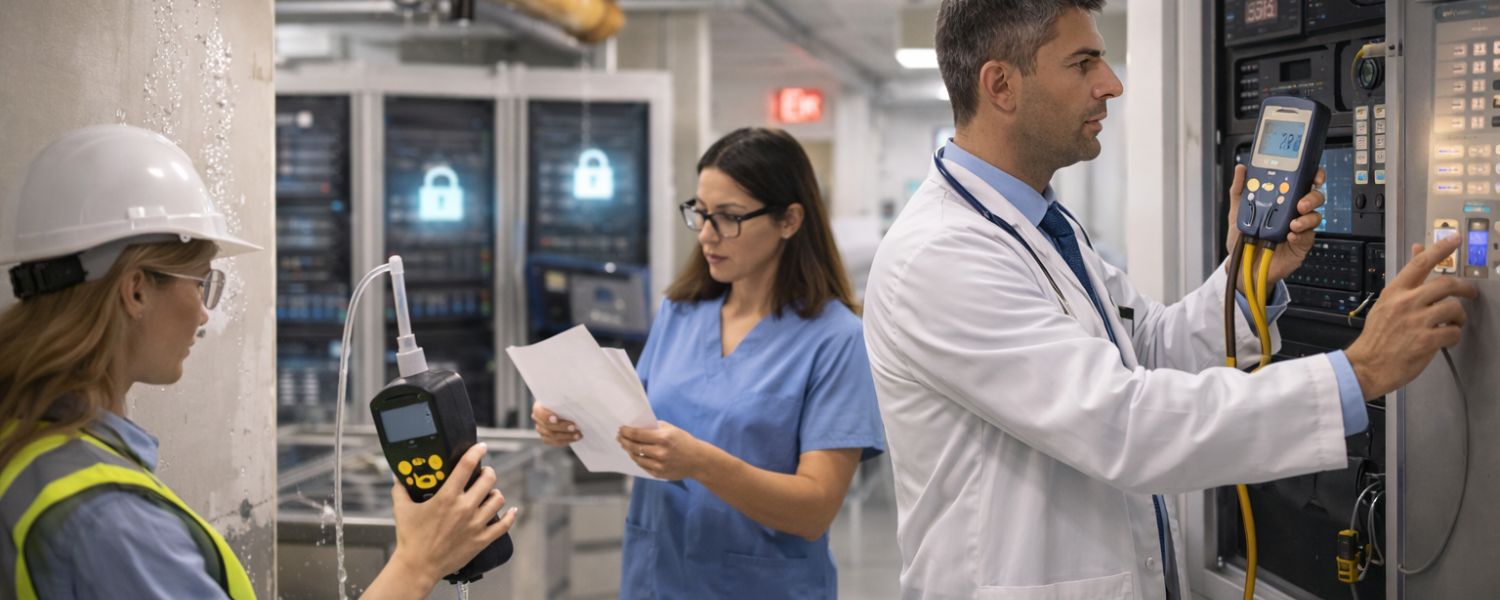
Staying compliant is a moving target. Healthcare organizations face several hurdles:
- Constant Regulatory Updates: Laws change frequently. Keeping up with new mandates from the CDC, CMS, or OSHA is a full-time job.
- Staff Adherence: Even with the best policies, human error happens. Constant retraining is needed to ensure every staff member understands what is healthcare compliance.
- Physical Facility Gaps: Older buildings often struggle to meet modern standards for air filtration or water safety. This is why regular Indoor Air Quality Assessments and system audits are necessary.
- Data Security: As healthcare becomes more digital, protecting against cyberattacks has become a central compliance concern.
How can these risks be reduced? The answer is regular testing and monitoring. By identifying a small leak in a water system or a slight drop in HVAC pressure early, a facility can fix the issue before it leads to a compliance violation or a patient injury.
Conclusion: The Holistic View of Compliance
What is healthcare compliance? Healthcare compliance is more than a list of rules. Healthcare compliance is a system that is designed to make sure medical care is safe and good. It covers a lot of things. For example it covers how a doctor bills a patient. It also covers how a technician tests the air in a cleanroom.
In todays world you cannot separate the side of healthcare compliance from the way things are actually done. A facility that bills patients correctly but has air filtration systems is not really following the rules. To protect your organization you have to look at the picture.
When doctors and administrators really understand what healthcare compliance is, they see it as a way to be excellent. By making sure Industrial Hygiene Assessment and Exposure Monitoring are. By doing Water Testing and Compliance and HVAC Testing and Compliance you can make sure your facility is a safe place for people to get better.
Does your facility follow all the healthcare compliance rules? Do not wait for someone to come and check. Look at your systems today. Check the air and the facilities. You can do things like Indoor Air Quality Assessment or Cleanroom Performance Testing and Certification. If you do these things now you will be protecting your patients and your staff and your organization. Understanding what healthcare compliance is is the step.. Taking action to maintain healthcare compliance is the most important thing. Contact us today to learn more, about how we can help you follow the healthcare compliance rules and have an efficient healthcare environment.





Leave A Comment